
How to Expand Your Native App to the Web?
Expand your native app to the web with ANODA UX Agency. Discover strategies to reach new users, enhance functionality, and boost engagement. Contact us today!
Get a content-led website built in Astro — fast pages, a CMS your editors can publish to, and interactive parts only where they earn their place.

A content site that loads fast and is easy to publish to, with script only where it helps.
Plans and designs the site: its structure, pages and look.
Astro Development
Builds the agreed site in Astro, wired to the CMS your editors use.
Not included
What you hold at the end, from the content model to the launch.
Page types, content types, CMS fields and the acceptance test for each, agreed before the build.
Templates and components for every page type, responsive, with scripts loaded only where needed.
Your CMS connected, draft previews, and the live site updated when an editor publishes.
Redirects, metadata and checks done, deployed on your hosting, with an editor guide and a runbook.
You receive
As an Astro development agency we decide which parts of each page stay static and which run in the browser, and we write down who owns the CMS, the hosting and the launch before the first template.
Content types and fields agreed; repository, design tokens, base layouts and preview deploys set up. Needs Approved designs for each page type, and a CMS choice or a shortlist.
Done when The content model and page types are approved, and editors can preview a draft before it goes live.
Each page type built with real content and checked at every breakpoint, with scripts added only to the parts that need them. Needs Final copy for every page type, and someone who knows the content to check it.
Done when The page reads correctly with scripts switched off, apart from its interactive parts, and meets the speed budget.
The CMS connected with draft previews; forms, search and analytics wired in; publishing updates the live site. Needs CMS admin access, and accounts or test keys for each tool.
Done when An editor publishes a change and sees it live within the agreed time, and forms reach the right inbox.
Existing content moved by script, old URLs redirected, accessibility and metadata checked; the old site kept to fall back on. Needs An export of the current content, and the URLs that must keep working.
Done when Every listed URL resolves or redirects, item counts match the source, and you sign off the domain switch.
Editors walked through publishing; code, docs and every account handed to your team. Needs Your repository, hosting and CMS accounts, or ones we transfer to you.
Done when Your editors publish a new page, and your developers ship a change, without us.
ANODA builds
Your team owns
Platforms and tools provide
It suits sites that are mostly read, not worked in. Four signs it fits now.
Pages, articles, docs and case studies people read, with a few tools in between.
Search traffic, ad landing pages or slow phone connections make every second count.
Plugins pile up, the builder limits layouts, or plan fees grow with every seat.
Someone on your side, or a partner, handles changes beyond editing content.
A different starting point
Tell us what the site publishes, who edits it and where it runs today. We will come back with a content model and a realistic next step.
Page types, the content model, the CMS, integrations and the review rhythm are agreed before the build.
Tell us about the pages and content, who edits them, and the platform the site runs on today.
Message received.
Within 15 minutes, we’ll email you initial feedback and follow-up questions.
Expand your native app to the web with ANODA UX Agency. Discover strategies to reach new users, enhance functionality, and boost engagement. Contact us today!
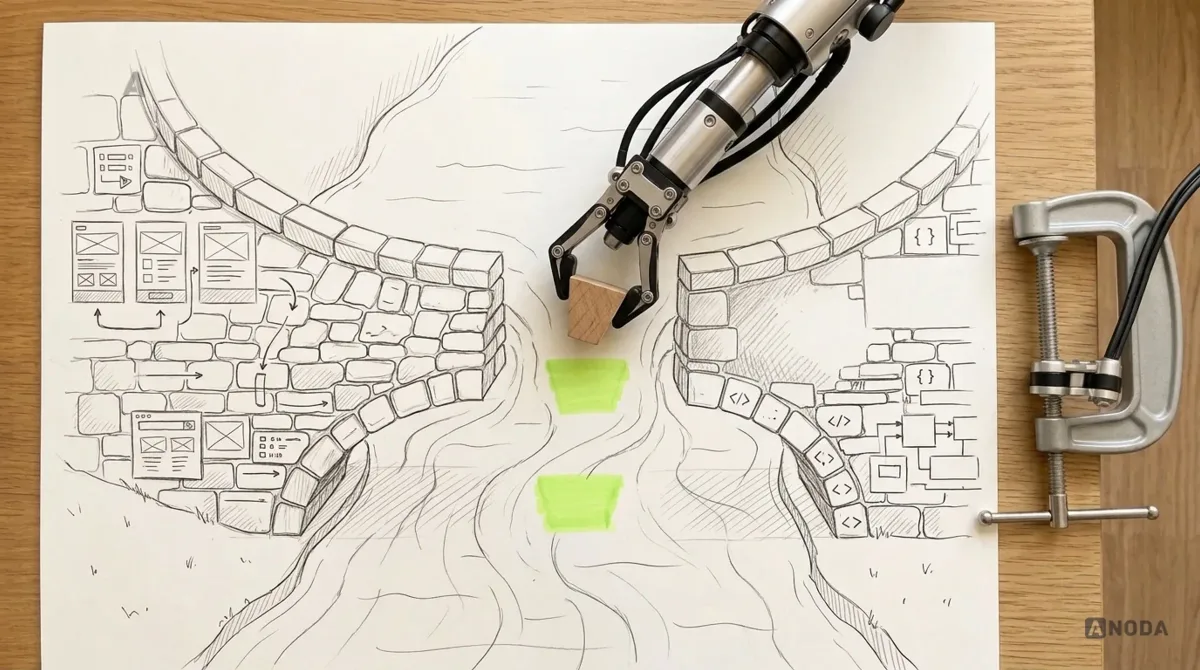
Compare UX designers and front-end developers by responsibilities, skills, tools, deliverables, career paths and how the two roles collaborate.
A team that starts with the content model, not the homepage. Ask which CMS they recommend for your editors and why, how drafts are previewed, how much JavaScript a typical page ships, and how they keep old URLs working when a site moves. Ask to see Astro sites they built and still run. This website is built in Astro by our own team — an internal example, not a client result. The client cases on our site are design projects, and we do not count them as Astro proof.
A technical scope with the content model and acceptance criteria; layouts, templates and components for every page type; the CMS set up with draft previews; interactive parts such as search, filters, forms or calculators where they are in scope; metadata, sitemaps, redirects and structured data; moving existing content; accessibility and speed checks; deployment on your hosting; and an editor guide with a walkthrough.
It is when most of the site is read rather than used: marketing pages, articles, docs, case studies, a resource hub. Astro sends plain HTML by default and adds script only to the parts that need it, so pages stay light. It is the wrong choice when the site is an app people sign in to and work in — React or Next.js fit better — or when marketers must build new layouts visually without a developer, where Webflow or Framer serve better. We say which one fits before the build.
Astro works with most headless CMSs, such as Sanity, Storyblok, Contentful, or WordPress kept as a back end only, and with Markdown files in Git for technical teams. Editors write, preview and publish in the CMS, and the live site updates on its own. Adding pages from existing templates needs no developer; a new kind of layout does. That trade-off is the main difference from a visual builder, and we agree it with you up front.
Yes, and Astro is often where such a move ends up. We list every URL that must keep working, map it to a new page or a redirect, move content by script rather than by hand, and keep the old site running until you approve the switch. For a large site, or one where search traffic is at stake, Website Migration & Replatforming covers the move as its own scope.
Signed-off layouts per page type, launch text and images or a date for them, your preferred CMS or two or three candidates, a content export with the list of URLs to keep, test keys for connected tools, and a single approver for each stage. If the design is not quite ready, the content model and foundation can start while it is finished.
Through criteria we write down before the build: how much JavaScript each template may ship and how fast it must load, responsive images and fonts that do not block the page, keyboard use and contrast on every page type, required alt text in the CMS, metadata and a sitemap for indexable pages, and a redirect for each retired URL. We check each release against them. Astro makes a light site easier to build, but we promise no rankings or scores.
The source code in your repository, the site on your hosting, the CMS set up in your account, an editor guide on adding pages and items safely, a runbook for deploys, and a walkthrough with your team. After launch your editors publish and your developers maintain the code. New page types, fixes, usability testing or a design refresh can continue with us, each on its own scope.
Page types and content types, the amount and state of the content being moved, the CMS and tools to connect, any interactive islands, the URLs to keep alive, the quality criteria and how ready the design is. We set a custom scope and estimate in the proposal, fixed or phased, and agree the timeline once scope, access, dependencies and acceptance criteria are clear.
Designing the site from scratch, copywriting, brand work, app features behind a sign-in, and the plans and fees of your CMS, hosting and other tools, which stay in your accounts. A lighter site helps, but traffic, rankings and conversions are not ours to guarantee, and speed, security and uptime targets are the ones written into the criteria.