
Mobile Site vs Responsive Design: Choosing the Best Approach for Your Website
Choosing between mobile and responsive design? Compare usability, SEO, and conversion benefits. Get expert guidance from ANODA UX Design Agency. Optimize today!
Get your site built in Framer from an agreed design — components with variants, responsive pages, CMS collections and light interactions — so your designers can change and publish it themselves.

A design-led site built in Framer, with components and a CMS your team publishes from.
Builds in Webflow, for marketing teams running larger content collections.
Framer Development
Builds in Framer, where designers own the canvas and publish themselves.
Not included
What ends up in your workspace, from the component plan to the editor guide.
Pages, components, CMS collections and integrations mapped and agreed before the build.
Components with variants for each state and breakpoint, and every page in scope built from them.
Collections with their template pages, and interactions kept light enough to stay fast.
The site published on your domain, with a guide to editing, publishing and adding pages.
You receive
As a Framer agency we set up components, variants and collections the way your designers already think, and write down who owns the workspace, the domain and publishing before the first page.
Colour, type, spacing and breakpoints set up as shared styles; core components built with their variants. Needs Approved layouts, or the design file, for each page type at desktop and phone.
Done when Shared styles and components match the approved design at every agreed breakpoint.
Each page built from components with real content and checked on desktop, tablet and phone before the next. Needs Launch copy and images, or a plan for what arrives later.
Done when Each page works with real content on the agreed browsers and devices.
Collections and template pages set up; interactions added and kept light; forms and tools connected. Needs The content for each collection, and access to each tool the forms feed.
Done when Every collection item renders on its template, forms deliver, and motion respects reduced-motion settings.
Speed, accessibility, metadata and redirects checked on a staging link; the domain connected; a version kept to roll back to. Needs Old URLs worth keeping, and the person who presses publish or approves it.
Done when Keyboard use, contrast, alt text and redirects are in place, and you sign off before the domain switches.
Your team walked through editing, the CMS and publishing; the project stays in your workspace. Needs Seats in your Framer workspace for the people who will edit.
Done when Your team adds a page from components and a CMS item, and publishes both on its own.
ANODA builds
Your team owns
Platforms and tools provide
It fits design-led sites that the design team wants to own. Four signs it fits now.
The people who design pages want to change and publish them, with no hand-off.
Launch pages, product stories and brand sites where the craft is part of the pitch.
A blog, case studies or a changelog in a few simple collections.
New pages and campaigns ship often, and the site stays a marketing site.
A different starting point

Tell us where the design stands and who will publish the site. We will come back with a build plan and a realistic next step.
Pages, components, collections, integrations and the review rhythm are agreed before the build.
Tell us where the design stands, which pages and collections you need, and who on your team will publish.
Message received.
Within 15 minutes, we’ll email you initial feedback and follow-up questions.
Choosing between mobile and responsive design? Compare usability, SEO, and conversion benefits. Get expert guidance from ANODA UX Design Agency. Optimize today!
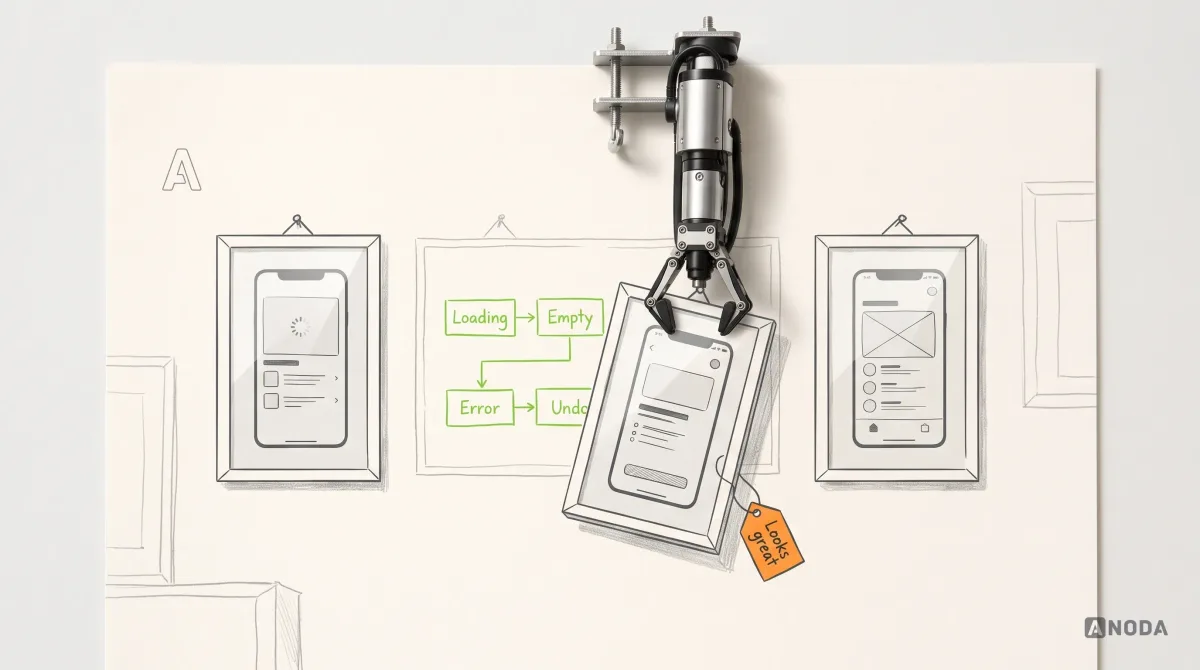
Explore user interface design examples from real products and learn how hierarchy, feedback, navigation, accessibility, and system consistency make them work.
A Framer development agency should build with components and variants, not copied frames, so one change updates every page. Ask how they set up the CMS, how they check breakpoints on real devices, how heavy their interactions are, and what your team can do alone after handoff. Ask to see live Framer sites they built — a design portfolio says nothing about the build. We are not a Framer partner, and the cases we publish are design projects, so they are not offered as proof of Framer builds.
A build plan; shared styles and components with variants; every page in scope built responsively from them; CMS collections with template pages; interactions kept light and accessible; forms and the integrations in scope; page titles, meta, alt text and redirects; checks across browsers and devices; publishing on your domain; and a short guide with a walkthrough for the people who will edit. On an existing Framer site we review the project first, then agree what to keep, repair or rebuild.
Choose Framer when designers will own the site, look and motion matter, and the content fits a few simple collections. Choose Webflow when marketing runs larger, linked collections with several editors. If editors already live in WordPress, stay there; if you want the code in your own repository and a very light site, Astro fits better. We say which one fits during planning, before the build, and the choice is yours. Framer's CMS offers fewer ways to link collections than Webflow's, and custom code components need a developer, so we check both against your plans for the next year.
Start with Framer development when desktop and phone layouts are approved, in Figma or on a Framer canvas. We rebuild them as proper components rather than pasting frames in, so the site stays easy to change. If the structure, pages or look are still open, start with Website Design; design and build can also run as one engagement. We also agree which pages the design team will build later on its own, so the components are made for that.
Yes. We review the project first: how components are set up, whether breakpoints hold, how the CMS is organised and what slows pages down. Then we agree whether to repair it in place or rebuild parts of it, keeping every URL that matters. Common fixes are frames that should be components, breakpoints set by hand on every page, and CMS fields nobody uses. If the site has outgrown Framer, Migrate from Framer covers the move as a separate service.
Desktop and phone layouts approved for each page type, launch copy and images or a date for them, the entries for every CMS collection, editor seats in your Framer workspace, logins or test accounts for the tools your forms send to, and one approver per stage. For an existing site, the live project and the list of URLs that must keep working. If the content is not ready, the foundation and components can start while it is finished.
As written acceptance criteria agreed before the build: light interactions that respect reduced-motion settings, image sizes kept in check, keyboard use and contrast on every page, alt text and page titles set, and redirects for old URLs. We check the site against them before publishing. Hosting runs on Framer under your plan, so its uptime is Framer's to keep, and we promise no rankings or speed scores. Custom fonts, embedded videos and third-party scripts are the usual causes of a slow Framer page, so each one is weighed before it goes in.
The finished project in your own Framer workspace, a short guide on editing text, adding CMS items and building new pages from components, and a walkthrough with your team. The guide also says what should go through someone who knows the build, such as changing a shared component. After launch your team publishes. New pages, fixes, usability testing or a design refresh can continue with us, each on its own scope. Framer keeps a version history, and the guide shows how to restore an earlier version if a change goes wrong.
The number of pages and components, the collections, the interactions, the integrations, how much content is ready, and whether an existing site has to be reviewed first. We set a custom scope and estimate in the proposal, fixed or phased, and agree the timeline once scope, access and dependencies are clear. A phased scope often suits: the foundation and key pages first, then collections and further pages.
Designing the site from scratch, copywriting, brand work, custom code beyond Framer components, moving the site off Framer, and Framer plans, domains and third-party fees, which stay in your accounts. Traffic, rankings and conversions are not guaranteed, and page speed is held only to the criteria you signed off.