
Real Estate Mobile App Benefits
Real Estate Mobile App Benefits: practical guidance, examples and decision criteria from ANODA. Learn how the topic applies to your product and team.
Design the property products people search, list and apply in — maps and filters, listings owners keep current, and the applications and offers that turn a viewing into a deal.

From the first search to a signed offer, for the people looking and the people who own the space.
Short stays: guests, hosts and nights booked.
Real Estate & PropTech Design
Space people live, work or give in, and the deal to get it.
Not included
Searches that return nothing useful, stale listings, stalled applications, agents juggling devices: here is the design response to each.
Map and list together, filters that match how people narrow a search.
Photos, price, availability and status, edited in minutes, not by email.
Apply, shortlist, offer and counter, with both sides seeing where it stands.
The same records on a phone, a tablet or a browser panel, on the move.
You receive
Real estate UX design is mostly what happens after the search: a price changes, a space goes to someone else, a document is missing. We design how each of those moments reads to the person searching and to the owner waiting on them.
Space-sharing, mortgage tools for agents and residential construction.
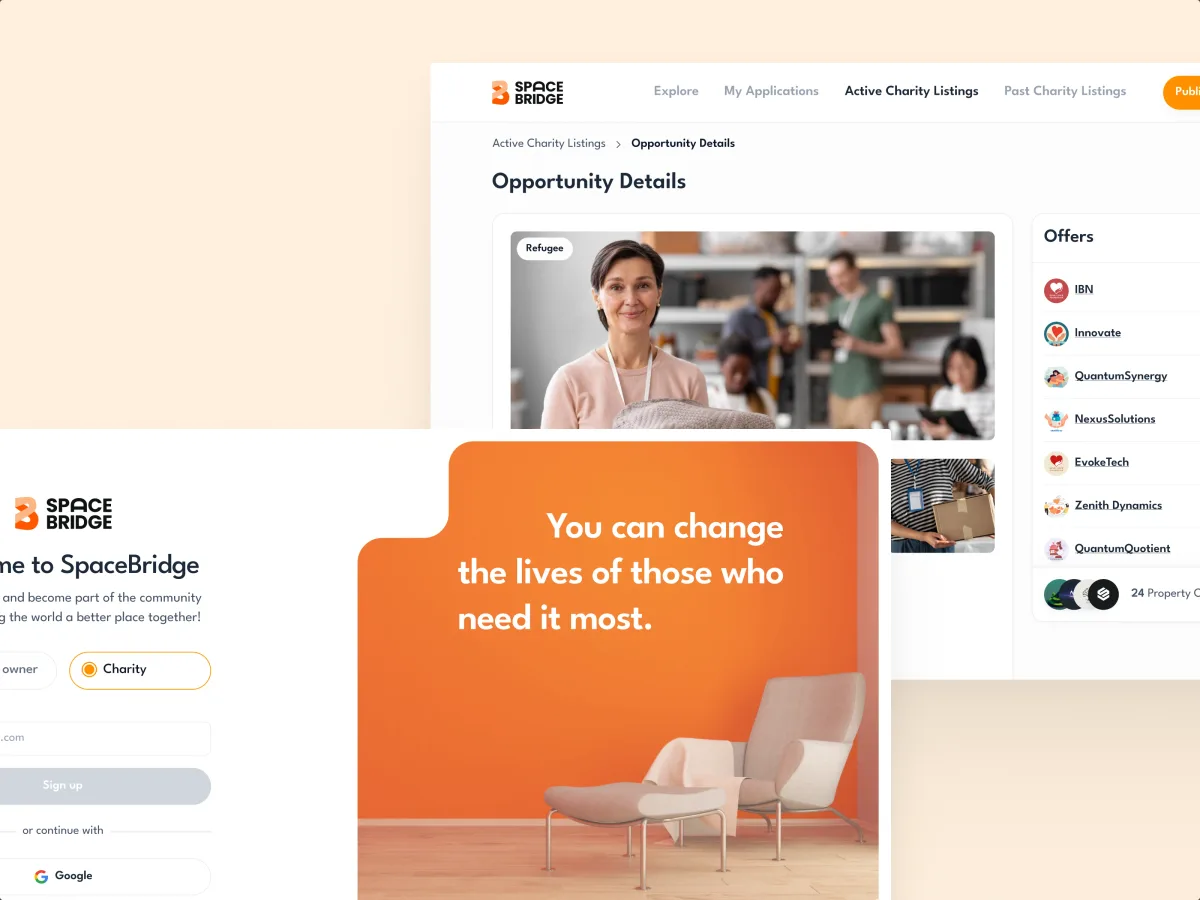
PropTech · Charity · Web SaaS
Designed a SaaS platform where owners list free or discounted space and charities apply — two roles, one route from an empty room to a chosen charity.
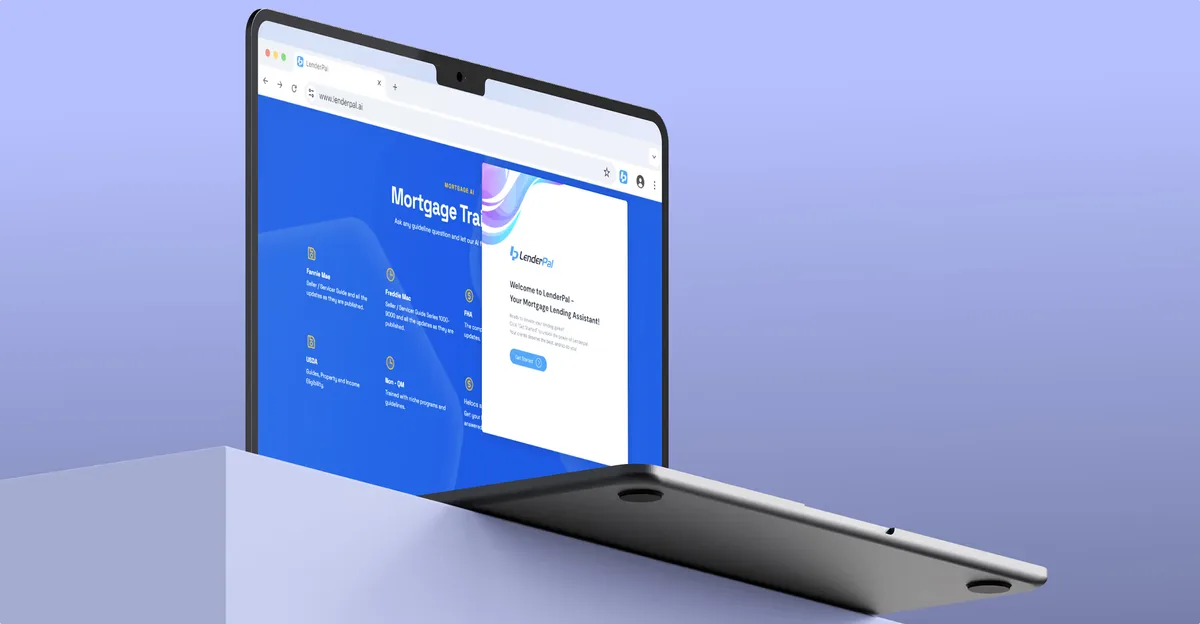
Chrome extension · Real Estate
Fitted a full real-estate lending workflow — property map, borrower details, insurance quotes — into a Chrome extension for loan officers, with its Admin product and AI on one design system.
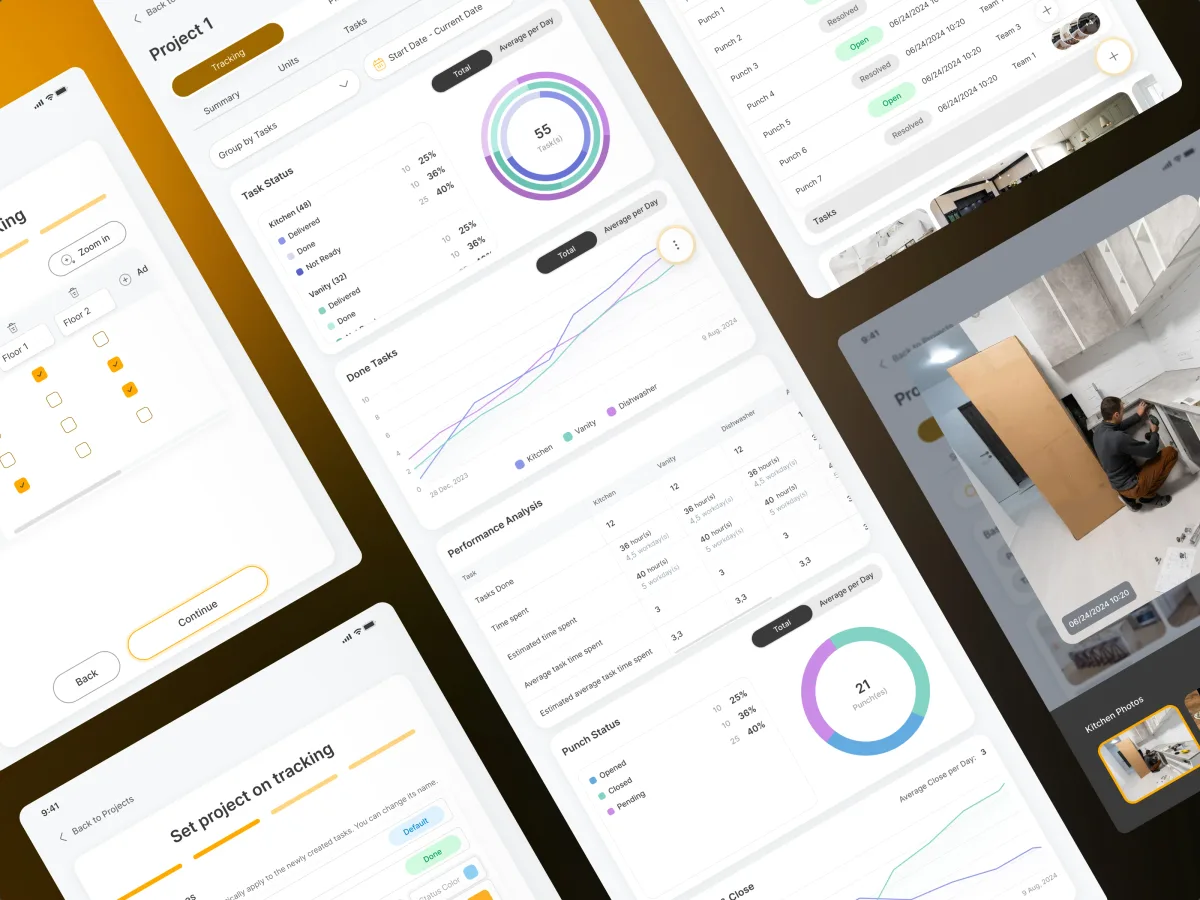
PropTech · Construction · Tablet app
Designed a tablet-first platform for kitchen installation across multi-unit residential buildings — estimators, site managers, teams and homeowners in one system.
It fits when space is what people choose and a deal is what they want, and most of the following sounds like your platform.
Homes, offices, units or rooms, compared by place, price and size.
Owners list, others apply, and both need to see where it stands.
Applications, documents and offers hold deals up more than search does.
Your team can say who qualifies, what an offer needs and who approves it.
A different starting point

Tell us who lists, who looks and where deals stall. You will hear back where we would begin, and how much of your team it needs.
The chosen service's proposal lists what we design, search to signed offer, and the dates your team reviews it.
Tell us who lists space, who searches for it, and where applications and offers slow down.
Message received.
Within 15 minutes, we’ll email you initial feedback and follow-up questions.
Real Estate Mobile App Benefits: practical guidance, examples and decision criteria from ANODA. Learn how the topic applies to your product and team.
Improve user flow with ANODA UX Agency. Discover principles, tools, and strategies to design seamless, intuitive UX. Start improving your user experience today!
Ask for property products, not only attractive listing pages. An agency that has done property work will show what a searcher sees when nothing matches, how an application moves to an offer, what an owner sees when ten people apply, and how the statuses were written down for engineers. Find out which projects shipped and which stayed on paper, and which designers you would actually get. Our SpaceBridge, LenderPal and Cabinit cases show that work.
You get the deal traced from search to offer for every role, each listing and application status designed, a prototype you can put in front of renters or buyers, the UI, and build-ready files. What moves the budget: how many sides the deal has (searcher, owner, agent), how many kinds of property you list, how many steps an application or offer passes through, and whether you start from a live platform or a blank page. Both get numbers in the first proposal.
Owners, landlords and the agents who act for them; buyers, tenants and organisations looking for space; site managers and admins. The workflows are search and saved searches, map views, listing creation and upkeep, viewings, applications and shortlists, offers and counter-offers, documents, and handover. Short stays booked by the night belong to our Travel & Hospitality work.
A platform that is not live yet begins with UI/UX & Product Design, search to signed offer. If searchers already leave before they apply, the UX Audit is the place to begin. Owner and agent dashboards fit Web App Design. For real estate app design where buyers, tenants or agents work from a phone, Mobile App Design. Product Redesign fits a platform its users have outgrown, and Marketplace Design fits when many independent sellers compete for the same buyers.
We design the screens these rules live on; the rules themselves are your lawyers' call. We design what an application asks for and why, what each role may see about an applicant, where disclosures and terms appear, and how a decision is recorded. Real estate UX design can make these rules clear and consistent across every role. Whether the product meets housing, lending or consumer law where you operate is for your legal advisers to decide, and we follow the wording they approve.
One person who can make product calls, a staging platform stocked with sample listings and a login for owner, agent and applicant, and your rules as they stand: who qualifies, what an application needs and how offers are approved. Search analytics and support tickets reveal where people give up. We also want an early session with engineering on listing feeds, maps and document tools, which set hard limits for search and applications.
SpaceBridge, a marketplace where property owners offer free or discounted space to charities — 64 unique screens for its two roles. LenderPal, a mortgage lending tool for loan officers inside a Chrome extension. Cabinit, a tablet platform for residential installation projects. ParaVistaStays, a villa-rental platform, is short-stay booking rather than property, so it sits on our Travel & Hospitality page.
Yes. Most property platforms are live, with listings, applications and offers in progress every day. We build on your existing UI kit and files, side by side with your own product people, and every file stays yours. If a change touches deals already under way, we agree with you how owners and applicants learn about it before it ships.