
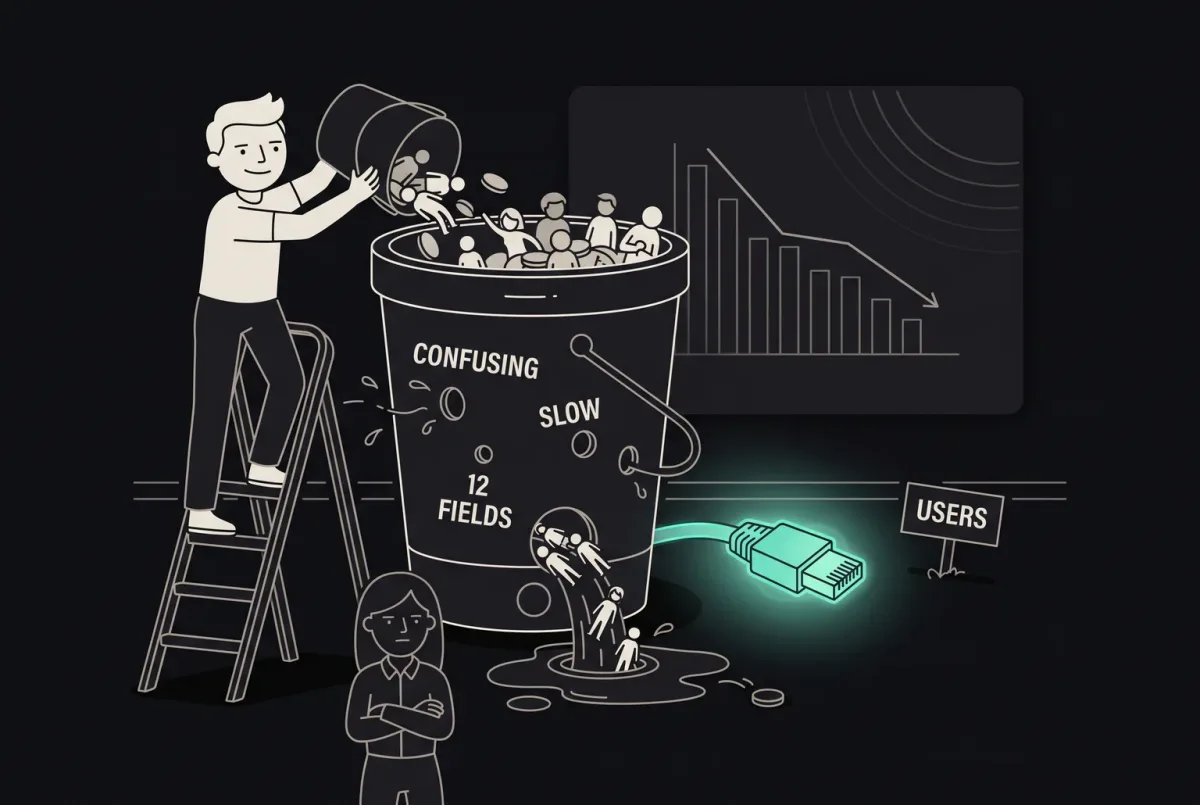
Boosting Mobile Conversions: Essential Mobile UX Design Best Practices
Boost mobile conversions with top UX design practices. Improve usability, user retention, and engagement. Learn how at ANODA UX Agency. Start optimizing today!
Design the travel products people use to find a stay, book it and live it — for guests, for the hosts behind each listing, and for the creators who trade content for a trip.

A stay that is easy to find, book and live, for the guest, the host and the creator in between.
The mechanics: slots, holds, payment and cancellation.
Travel & Hospitality Product Design
The trip around them: discovery, hosts, creators and the stay.
Not included
Stays guests cannot picture, roles tangled in one menu, creator deals agreed by email, trips that fall apart on the road — the design answer to each.
Map, photos, amenities and filters that let a guest choose without a call.
Each role with its own dashboard, inside one navigation.
A creator proposes a stay, a host answers, both see where it stands.
Itinerary, check-in, messages and changes, on the way and at the door.
You receive
Travel app design is judged away from home: dates vanish, a host is slow to reply, a signal drops at the airport. We design the guest's view of each moment and the host's view of the same one.
A live villa-rental platform, and a boat-rental marketplace designed over seven releases.
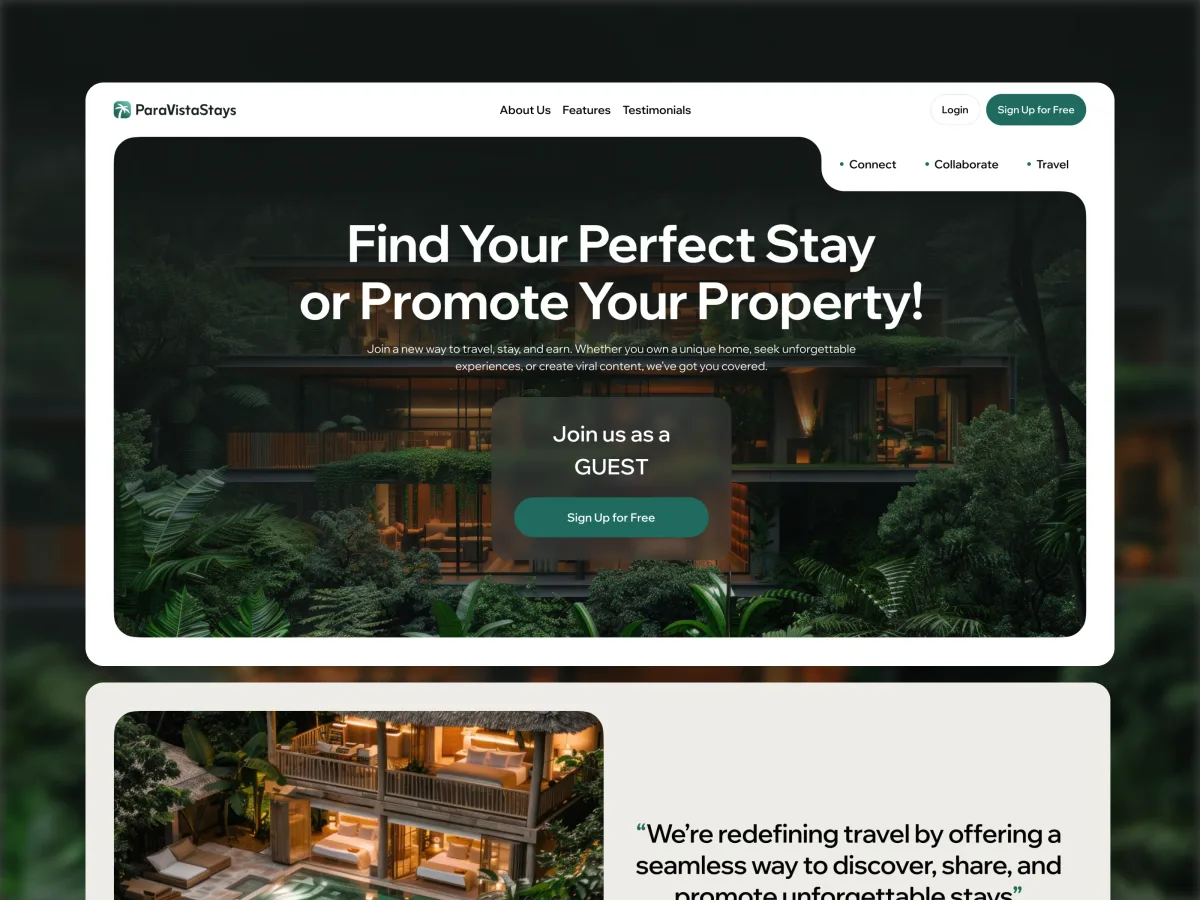
Travel · Marketplace · Mobile-first web + Admin + Landing
Redesigned a villa-rental platform where travellers book, hosts list and creators trade content for stays — web platform, mobile app and landing page on one design system.
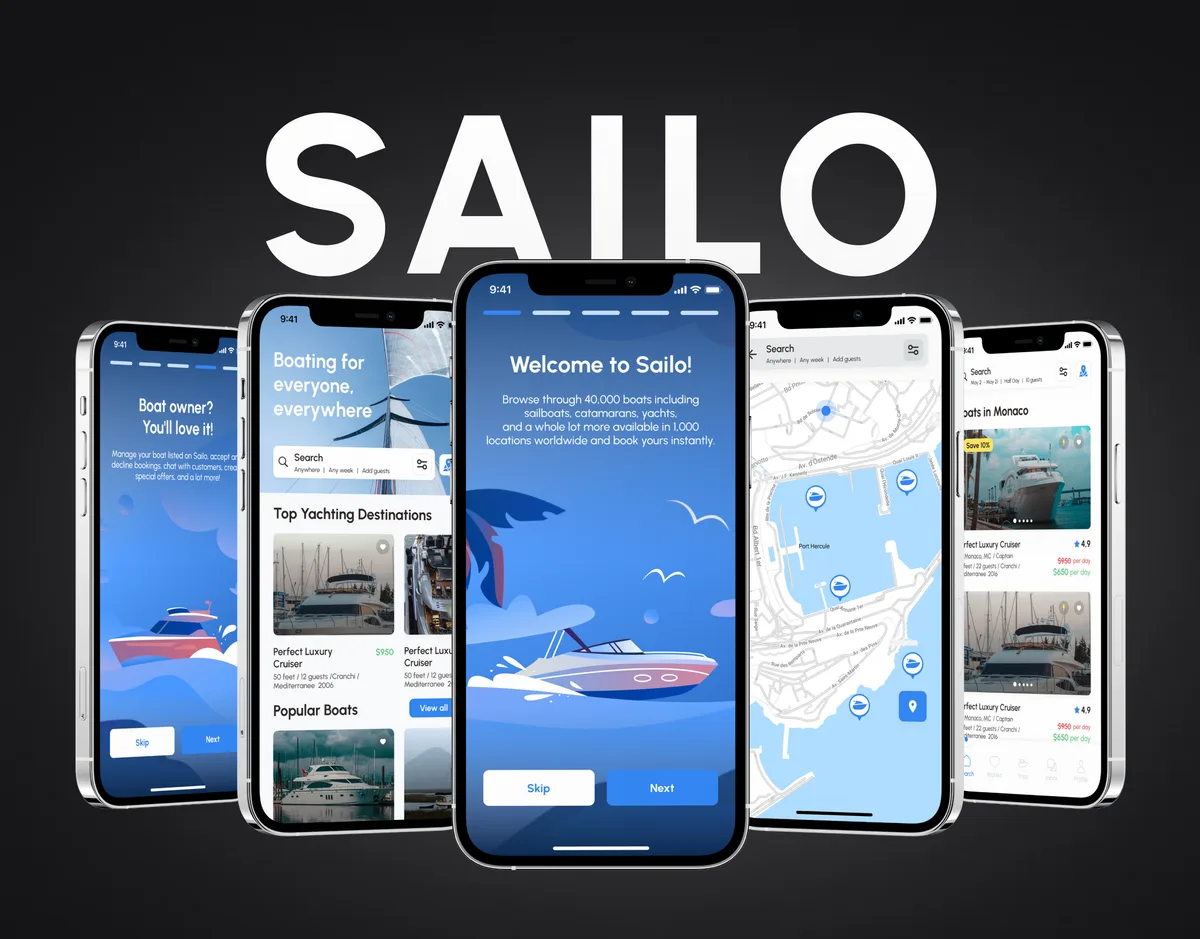
Travel · Marketplace · iOS app + Web + Website
Designed a marketplace for renting boats and yachts over seven releases — the iOS app, the web product and the public site, for renters and owners, on one design system.
It fits when people choose a place and then have to get there, and several of these apply.
Guests compare stays, trips or experiences by photos, place and dates.
Owners and managers list, price and answer requests every day.
Dates move, plans shift and guests need answers away from home.
Your team can say what hosts may set and how disputes are settled.
A different starting point

Tell us who books, who hosts and where trips go wrong. We'll tell you where we'd begin and what guests would notice first.
Guest, host and creator screens are scoped in the proposal for the service you choose, along with when you review them.
Tell us who books, who hosts, and where discovery, booking or the stay itself goes wrong.
Message received.
Within 15 minutes, we’ll email you initial feedback and follow-up questions.
Boost mobile conversions with top UX design practices. Improve usability, user retention, and engagement. Learn how at ANODA UX Agency. Start optimizing today!

How Push Notifications Work: practical guidance, examples and decision criteria from ANODA. Learn how the topic applies to your product and team.
Beautiful listing photos are not the test. A designer who knows travel can show how a guest chooses between stays, what a host sees when requests pile up, what happens when dates vanish mid-checkout, and how those states reached engineering. Check which projects went live, which were concepts, and whose work it was. ParaVistaStays and Sailo are clients’ products we designed, and each page says where our part ended.
Each role's trip from search to review, stay discovery, host and creator tools, the states in between, a prototype to test with guests, the UI and files ready for your developers. Budgets differ with the number of roles and platforms, how complex the booking and cancellation rules are, whether guests already use the product, and what exists already. The first service's proposal settles both price and dates.
Guests and the groups they travel with, hosts and property managers, creators who trade content for a stay, and the support and admin teams behind them. The workflows are discovery on a map, comparing and booking a stay, messaging a host, check-in, changing or cutting a trip short, reviews, creator proposals and content delivery, and the host's calendar and listings.
Until launch, the whole product sits with UI/UX & Product Design. For hospitality app design that guests use before and during a stay, Mobile App Design; for host and manager tools in the browser, Web App Design. If guests already abandon it, begin with a UX Audit; if they have outgrown it, Product Redesign. Availability, payment and cancellation rules are the core of Booking & Reservation.
We design them into the flow; the legal side stays with your advisers. We design what a guest sees before paying, how a cancellation or refund is explained, what a host may change, and how a dispute is raised and closed. Tourist taxes, consumer rules and platform terms differ by market; your legal and finance teams set them and sign them off, and the booking flow reflects what they decide.
A product owner with authority, staging with test listings and a login for guest, host and creator, and the rules as they stand: what hosts may set, how cancellations work and how creator deals are agreed. Booking analytics, reviews and support tickets tell us where guests give up. Talking to engineering early brings channel-manager and payment limits into the design before it sets.
ParaVistaStays, a villa-rental platform for guests, hosts and creators — 347 unique screens. And Sailo, a boat-rental marketplace — 1,000+ screens and states across seven releases. Figures sit on each case page.
Yes. Most travel platforms are live, with guests holding bookings and hosts relying on the calendar every day. We build on your design files and components, in step with your product team, keep what guests and hosts rely on, and hand over all of it. Changes that affect confirmed bookings go out with a plan, agreed with you, for telling guests and hosts.